
Carlos Vergara
CARLOS VERGARA
Santa Maria, Rio Grande do Sul, 1941
Carlos Vergara lives and works in Rio de Janeiro. His artistic practice, which began in the 1960s, is marked by poetic vigor and a constant exploration of different languages and media. In the 1970s, he became known for investigating national identity through allegories of nature, creating murals, panels, and immersive environments in partnership with architects in several countries, using Brazilian artisanal techniques. During this period, within Rio de Janeiro’s vibrant cultural scene, Vergara also documented bohemia and marginalized groups through photography. In his Carnival series, he captured collective force in the midst of the Military Dictatorship. As part of the New Brazilian Figuration movement, he advanced an approach that challenged divisions between art and craft, the erudite and the popular.
In the 1980s, Vergara participated in the Venice Biennale and major biennials in Brazil, such as the São Paulo Biennial, as well as international exhibitions, consolidating his position as one of Brazil’s leading contemporary artists. In that decade, he returned to painting, moving away from figuration and incorporating natural pigments and minerals, reflecting an ethic of transforming matter into art. His works are held in important collections, including MAM Rio, the Pinacoteca de São Paulo, and MAC Niterói, among others.
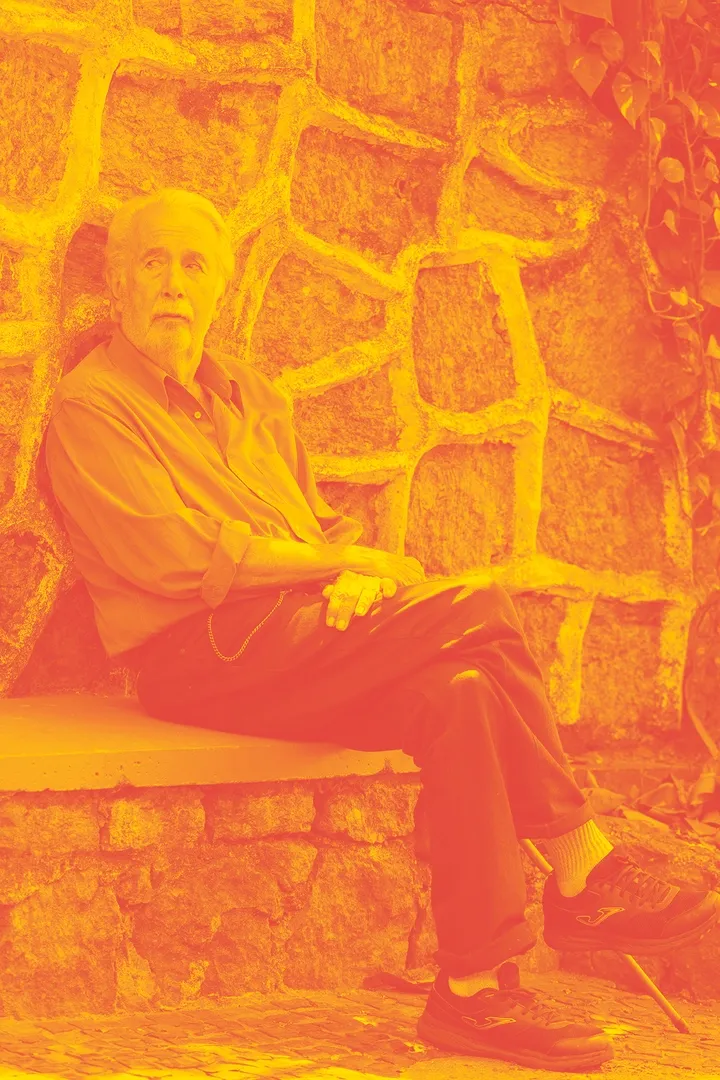
“Art has the function of allowing us to look outwards, so as to look inwards.
Carlos Vergara
Carlos Vergara: A Body in the World
Carlos Vergara belongs to a lineage of artists for whom walking and exploration are not only aesthetic practices, but also an ethic of engagement with the world. His excursions along trails, through thickets, and into forests reveal an ongoing pursuit to understand and record the marks left by time and culture across different environments. With his body in motion, he traces new maps and reinterprets old paths, in a journey that is both physical and spiritual. His monotypes are an example of works that capture this direct encounter with the landscape—a way of marking the ground where nature and history intertwine.
This practice, devoted to experience and immersing the artist in the world with such visceral intensity, also invites the viewer to take an active role in the aesthetic encounter. Vergara does not offer only objects to be contemplated, but lenses through which the surrounding environment can be rediscovered. The artist’s moving body becomes an extension of the viewer’s body, enabling new ways of seeing and understanding the world. By entering these spaces and proposing new narratives, Vergara reminds us of the importance of being present—of inscribing ourselves in time and space—and of actively participating in the construction of meaning.
Ulisses Carrilho — Curator